
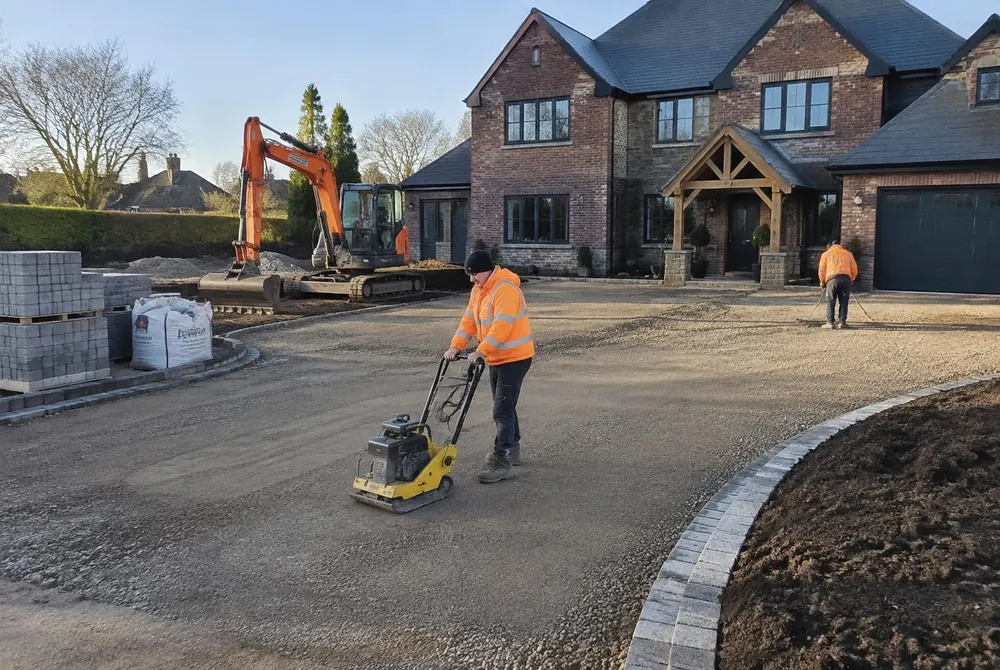
French drain cost depends on the run, excavation, pipe and aggregate specification, safe outlet, access, waste removal and reinstatement. No fixed price is published here. Establish the cause of the wet ground and a lawful destination for collected water before asking for a trench allowance.
At a glance
- Identify the source of water before choosing the drainage run.
- Price pipe, stone, filtration and the outlet as one system.
- Include reinstating lawns, paving and access routes.
A lawn that squelches until May, a terrace that floods after every storm, a border where plants drown each winter: these are the gardens where a french drain earns its place. Done well, it quietly intercepts water below the surface and carries it somewhere it can disperse.
Done badly, it becomes a buried trench full of silt that moves water from one soggy corner to another. The difference lies in planning the route, the fall and, above all, the destination before a spade goes in.
What a french drain is and what it is not
A french drain is a trench lined with a geotextile membrane, part filled with clean angular stone, usually with a perforated pipe in the base. Water in the surrounding soil finds the easiest path, enters the stone, and runs along the pipe to an outlet.
It is not a cure for a broken rainwater pipe, a blocked gully or a leaking main. Those need fixing at source. Nor is it a replacement for surface channels on hard paving, which deal with water running across a surface rather than through the ground.
Signs your garden needs land drainage (standing water, clay, run-off from higher ground)
- Puddles that remain on grass a day or more after rain
- Moss, rushes or bare patches in a lawn that never dries
- Heavy clay subsoil that seals the ground below the topsoil
- A neighbouring garden or field higher than yours shedding water downhill
- Damp patches against garden walls or at the foot of a slope
Designing the run: fall, depth and spacing
Every run needs a steady gradient towards its outlet, set out with a laser level rather than by eye. Depth depends on what is being protected: a shallow interceptor across the top of a slope behaves differently from a deeper collector running alongside a wall.
For a large wet lawn, a herringbone of laterals feeding one main carrier is common, with spacing tightened on heavier ground. On a sloping plot, a single cut-off drain across the top of the problem area can catch water before it reaches the garden at all.
Pipe, aggregate and membrane choices
Perforated twin wall or flexible land drain pipe both work when laid to fall. Clean washed stone keeps voids open so water moves freely; fine or dirty material clogs them. Wrapping the stone in a non woven geotextile stops surrounding soil washing in, which is the most common reason old land drains fail. Rodding points at bends make future maintenance far easier.
Where the water goes: soakaway, ditch or existing drainage
The outlet decides whether the system works. Options include a correctly sized soakaway in free draining ground, a ditch or watercourse where permission allows, or in some cases an existing surface water system. Foul sewers are not an option for land drainage. We plan outlets as part of our drainage and soakaways work, and our driveway drainage and SuDS guide explains how surface water rules apply to hard areas.
French drains alongside patios, lawns and retaining walls
Land drains rarely sit in isolation. A new terrace may need one along its low edge, a new lawn benefits from drainage before turf goes down, and a retaining wall needs free draining backfill and a pipe at its base to prevent water pressure building up. Planning these together as part of hard and soft landscaping avoids digging the same garden twice.
French drain cost: price the route and outlet together
The visible length is only part of the budget. The excavation may cross lawns, planting or existing paving, and each needs different reinstatement. The required levels, buried services and available outlet can alter the route. Ask for these assumptions to be written down so a cheaper-looking trench price is not merely omitting the difficult end connection.
Suitable aggregate and filtration detail keep surrounding fines from compromising the drainage path. They belong in the specification with the pipe, not in a later conversation about extras. Where the system includes a soakaway or another drainage component, the designer needs to establish suitability rather than treating a pipe ending underground as a working outlet.
Separate diagnosis from the construction quote
Standing water can reflect poor levels, compacted surface soil, runoff from higher ground or a different drainage fault. A french drain is not automatically the answer. Record where water arrives and where it persists, then obtain an assessment that distinguishes the cause before asking contractors to price the same remedy.
Our land drainage service discusses the offered work. The waterlogged garden guide helps frame the initial observations. Send photographs and access details for a substantial drainage or garden project, with any proposed outlet identified rather than assumed.
Official guidance
Services this relates to
Want the figure for your own property? Call 07770 880587 or email enquiries@breakinggroundltd.co.uk and we will arrange a site visit.