
Excavation and Muck Away
Excavation and muck away contractors in Colchester
Reduced-level digs, footing excavation and responsible spoil management for substantial residential groundworks and construction projects.
The approach
A controlled dig starts with levels, access and a plan for every load.
Excavation changes a site quickly, which is why the decisions must be made before the machine starts. A reduced-level dig needs a datum, formation level, temporary water plan, safe access and a clear understanding of where excavated material will go. Digging first and measuring later creates unnecessary disposal and imported fill.
We undertake excavation for foundations, floors, driveways, terraces and plot preparation. Our focus is planned residential construction and substantial external schemes, not basement excavation. Machine choice, lorry movements and reuse are matched to the site rather than defaulting to the largest plant available.
Before quotation, drawings and levels are reviewed alongside access photographs and any ground information. The proposed build-up defines the formation, while waste classification and reuse proposals define material movements. Where quantities remain uncertain, the basis of measurement and assumptions are stated. This is more useful than promising a fixed number of loads before the material is exposed. It also allows the client to compare whether another proposal includes breaking old foundations, carting unsuitable fill and bringing back the aggregate required for the next stage.
Muck away as a planned service
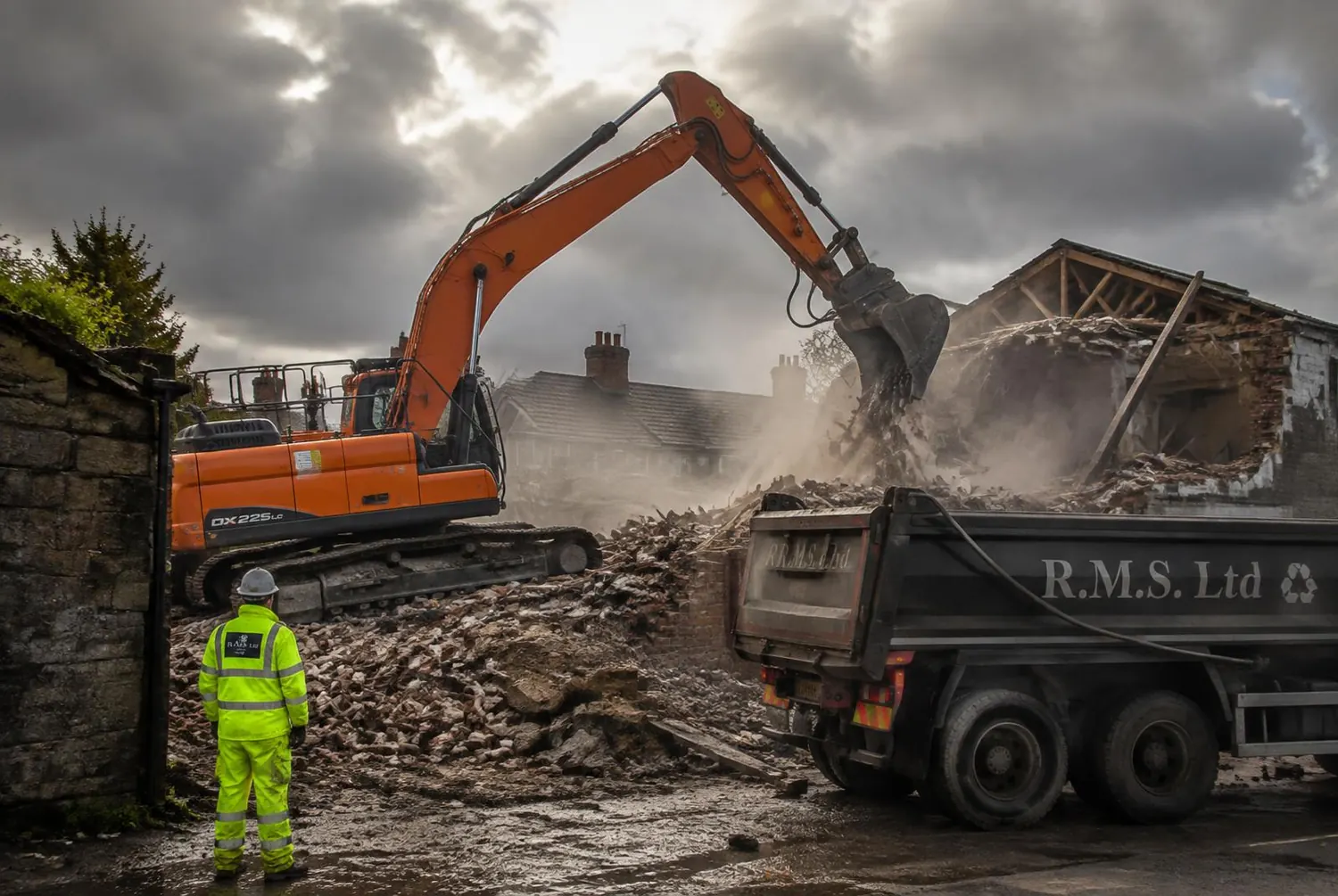
Muck away is the removal of excavated soil, subsoil and rubble from site. On most excavation jobs it is the largest single movement of material, and it needs planning before the first bucket goes in: how much will come out, where it will be stockpiled, how lorries reach it and what can be reused on site. Every load leaves with a waste transfer note.
Where a heap sits behind a wall or a tipper cannot be loaded directly, grab hire may suit better. Our muck away and grab hire cost guide explains what changes the price of removing spoil.
Digger hire with driver
Some clients ask for digger hire with a driver rather than a defined package. We prefer to agree the excavation scope, the levels and the spoil plan first, then provide an operated machine to carry it out, so the result is measured against a target rather than simply hours on site. That protects you from paying for time spent working out what should have been decided before the machine arrived.
Swimming pool and pond excavation
A swimming pool dig is a large, accurate excavation to the pool builder's drawings, often in the back garden with limited access. Shape, depth, battered or supported sides, groundwater and a very large volume of spoil all need planning. We excavate to the pool installer's specification; the pool shell and plant are theirs. The same approach applies to large ornamental ponds.
Trenches and smaller excavations
Not every dig is a reduced level. Narrow runs for cables, ducts, water and drainage are covered by our trenching service, where depth, bedding and neat reinstatement matter more than volume.
What affects the cost
Excavation cost depends on volume, material type, depth, access, machinery, haulage, disposal route and what can be reused. We price every job from a site visit with a fixed, itemised quote. Guide figures only, because levels, access and drainage decide the final price. Every quotation we issue is fixed and itemised.
Reduced-level digs
Ground is reduced to the designed formation for a building, driveway or garden level. Datums and profiles control depth, while temporary slopes or support and surface-water management keep the excavation workable.
Foundation excavation
Strip, trench-fill, pad and raft preparation follows the engineer's drawing and inspection requirements. Excavation stops at the agreed level, and unexpected soft spots, services or ground changes are referred before additional work proceeds.
Access and machine size
Reach, operating weight, ground pressure, swing space and loading position all matter. Compact plant may protect restricted access, while larger machinery can be more efficient on open plots. The route must also support spoil leaving safely.
Spoil management
Clean soil, mixed excavation and demolition arisings may require different handling. Loads go through suitable carriers and facilities, with waste transfer notes supporting the duty of care. Material is not described as clean unless it genuinely is.
Reusing suitable material
Clean concrete and brick may be processed for reuse as hardcore where the project specification and material quality allow. Suitable excavated soil may help form designed levels. Reuse must be planned, not used to hide unsuitable material within the site.
A measured handover
The excavation is checked against datum and design before drainage, stone or concrete covers it. This gives the next stage a known level and quantity rather than leaving another trade to correct over-digging.
Quantities and site control
A measured excavation plan makes haulage more predictable. Existing and proposed levels are compared, material types are considered and any planned reuse is allocated a location before stockpiles block the site. The quotation distinguishes excavation, loading, transport, disposal and imported material so a change in one quantity can be understood. During work, a banksman, exclusion areas and controlled lorry movements protect people and retained property. Roads and access are kept serviceable, while rainfall is managed so clean formation is not churned into additional waste. Final levels are checked before the next layer is accepted.
Who this suits
New-build plots, extensions, large driveways, terraces and complete garden schemes requiring controlled excavation and documented spoil removal. Basement excavation is excluded.
- Reduced-level digs
- Foundation excavation
- Documented spoil removal
Read before you commit
- Self-build groundworks checklist before excavation
Where excavation fits in the order of a self-build.
- Grab hire cost and muck away cost: what changes the price
What drives the price of every load that leaves.
- How do trees affect foundations and excavation?
Building near trees requires two linked checks: how the ground may move and how construction could damage a tree that needs to remain.
- Can a manhole or inspection chamber be moved?
Moving a private drain chamber is possible in many situations, but the replacement must preserve drainage performance and practical maintenance access.
- Which surveys does your building site need?
Find out what different investigations reveal and how to turn their findings into practical groundworks decisions.
- How should you level a sloping garden?
A usable sloping garden starts with deciding which areas need to be level, which can stay sloped and how people and water will move between them.
- What should you budget to level a garden?
Garden levelling costs depend on soil movement, access and whether retaining or drainage work is needed.
- How much should you budget for a concrete base?
The cost of a concrete base depends on what it must support, the ground below it and how concrete reaches the site.
- How do you choose groundworkers near Colchester?
Choose a groundworks contractor by the work below ground, the site constraints and the detail of the proposed scope, not just the headline total.
Covering 30 miles of Colchester, including Colchester, Chelmsford, Ipswich, Braintree, Witham, Maldon, Sudbury, Clacton-on-Sea and Halstead.
Request a consultation
We take on new build contracts and substantial driveway and garden projects. Give us the detail and Matt will come back to you personally.
Questions we are asked
Excavation and Muck Away: your questions
What is a reduced-level dig?+
It removes ground to the designed formation level for the next construction layer. The required depth follows the drawings, levels and build-up rather than a standard amount.
How do you choose the excavator size?+
Access width, reach, ground bearing, loading position, output and the work around the excavation all matter. The best machine is the one that works safely and efficiently within those constraints.
What paperwork should accompany muck away?+
Waste holders have a duty of care. Suitable carriers and receiving facilities should be used, with waste transfer notes recording the movement and description of material.
Can crushed concrete be reused?+
Clean, suitable material can sometimes be processed and reused where the specification permits it. Contaminated or unsuitable arisings must follow the correct disposal route.
Do you excavate basements?+
No. Our excavation work covers plots, foundations, floors, driveways, terraces and landscape levels, not basement construction.
Do I need planning permission for excavation?+
Garden excavation for landscaping often does not, but significant level changes, engineering operations, basements and work in conservation areas or near listed buildings can. Check with the local planning authority before work is booked.
How much does excavation or muck away cost?+
It depends on volume, soil type, access, the distance to a licensed site and disposal charges. We price every job from a site visit with a fixed, itemised quote.
Can excavated topsoil stay on site?+
Often. Good topsoil can be stored and reused in borders and lawns, reducing the number of loads that need to leave.
Breaking Ground. Building Trust.
Discuss excavation and muck away for your property
Tell us what needs digging, the levels you want to reach and how lorries can get to the site.
Ten year guarantee on extensions and new builds / 30 miles of Colchester / Substantial projects