
Permeable Paving
Permeable paving for SuDS driveways and frontages
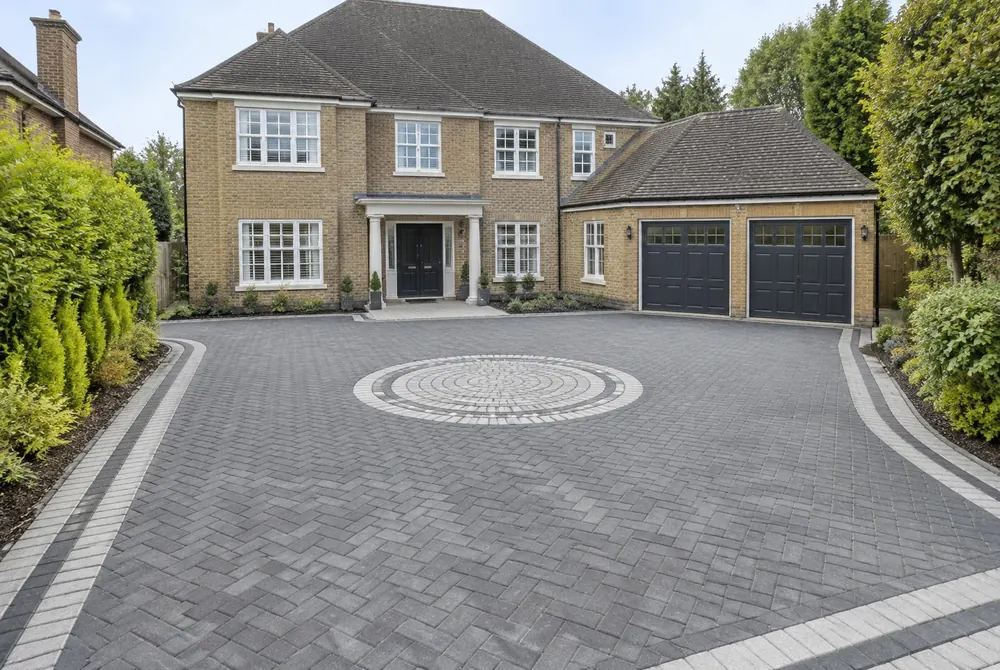
Permeable block paving and SuDS driveways that let rain soak through into a storage base instead of running to the road.
The approach
Let the rain go where it falls, and the driveway does half the drainage work itself.
Permeable paving lets rainwater pass through the surface into a specially graded stone base, where it is stored and then soaks into the ground or drains slowly away. It is one of the simplest ways to build a SuDS driveway, meaning sustainable drainage that deals with water on your own land rather than sending it to the street.
For many front gardens it also matters for planning. Paving over more than 5 square metres of a front garden with an impermeable surface needs permission unless the water drains within the property; a permeable design avoids that issue in most cases. Our driveway planning permission guide explains the rules, and the driveway drainage and SuDS guide covers other drainage options. This service sits within our designed driveways work.
How a permeable driveway is built
The surface is usually block paving with wider joints filled with fine clean grit rather than sand, so water can enter. Beneath it sits a laying course of grit and an open-graded crushed stone base with no fines, which leaves voids for water storage. A standard Type 1 sub-base is not used because its fines block the flow.
On free-draining ground the water infiltrates straight down. On clay, which is common across Essex, the base may be wrapped in a membrane and fitted with a perforated pipe to a soakaway or controlled outlet, because the soil cannot absorb water quickly enough.
Design decisions that matter
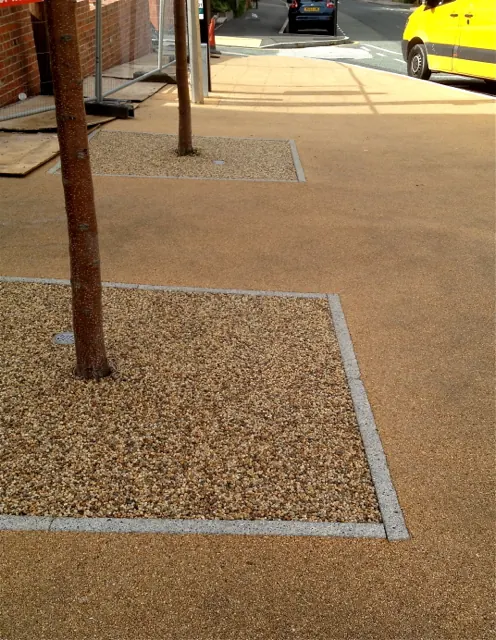
Base depth is set by traffic and by how much water must be stored. The edges need restraint just as on ordinary paving, and the build-up must not undermine the house foundations or push water towards them. Resin bound surfaces on a permeable base can also be SuDS-compliant; our resin driveways page covers that option.
Looking after permeable paving
Joints gradually collect silt and leaves. Occasional sweeping and, over time, topping up or refreshing the joint grit keep the surface draining. Avoid stockpiling soil or sand on the drive during building work, as it can clog the joints quickly.
What affects the cost
Permeable paving costs depend on area, base depth for load and storage, ground type, membranes and outlets, block choice and spoil removal. Guide figures only, because levels, access and drainage decide the final price. Every quotation we issue is fixed and itemised.
Ground assessment
Soil type and infiltration considered to decide between full infiltration or a piped outlet.
Excavation
Dug to the depth needed for load and water storage, with spoil removed.
Storage base
Open-graded stone laid and compacted, with membrane and pipework where required.
Surface
Permeable blocks laid with grit-filled joints and secure edge restraints.
Who this suits
Owners replacing or creating a larger driveway who want it to manage its own rainwater, avoid planning problems and stop water running to the road.
- SuDS-compliant driveways
- Designed storage base
- Planning-friendly frontages
Read before you commit
- Driveway drainage done properly: permeable bases, soakaways and SuDS
Pooling, flooding and outlet choices for any drive.
- Block paving weeds and sinking: what causes them
How to read weeds, hollows and loose blocks on a paved drive, and which faults need lifting rather than cleaning.
- How many years should you expect from a driveway?
A driveway's useful life depends on the structure underneath, the vehicles using it and whether developing faults receive the right attention.
- What does widening an existing driveway cost?
A driveway extension budget needs to cover a complete new construction beside the old surface, not just extra paving.
- Why does water stay on my driveway after rain?
Find the source and the missing drainage route before choosing a new surface or adding a channel.
Covering 30 miles of Colchester, including Colchester, Chelmsford, Ipswich, Braintree, Witham, Maldon, Sudbury, Clacton-on-Sea and Halstead.
Request a consultation
We take on new build contracts and substantial driveway and garden projects. Give us the detail and Matt will come back to you personally.
Questions we are asked
Permeable Paving: your questions
Does a permeable driveway need planning permission?+
Front garden paving that lets water drain within the property generally does not need permission on planning grounds. Listed buildings and other restrictions can still apply.
Can permeable paving work on clay soil?+
Yes, usually with a perforated pipe in the base carrying stored water to a soakaway or controlled outlet, because clay absorbs water slowly.
Is permeable block paving weaker than standard paving?+
No, when the base is designed for the loads it will carry. It is built differently, not to a lower standard.
Will weeds grow in the wider joints?+
Seeds can lodge in any joint. Regular sweeping limits this, and grit joints are less inviting to weeds than soil-filled gaps.
Breaking Ground. Building Trust.
Discuss permeable paving for your property
Tell us the frontage size, what parks on it and whether water currently runs to the road.
Ten year guarantee on extensions and new builds / 30 miles of Colchester / Substantial projects