
Short answer
As broad planning estimates, resin bound driveways often last around 15 to 25 years, block paving and permeable block paving around 20 to 30 years, and imprinted concrete around 20 to 30 years. These are not guarantees or automatic replacement dates. A sound driveway can remain serviceable longer, while poor construction or unsuitable loading can cause much earlier failure. Judge remaining life by stability, drainage and the extent of damage, not appearance alone.
Age is useful context, but it cannot tell you whether a driveway needs replacing. Faded blocks may still carry vehicles safely, whereas a newer resin surface can hide movement underneath. The important distinction is between cosmetic weathering, a local defect and a failing structure that no longer supports everyday use.
This guide looks at lifespan as a maintenance and replacement decision, rather than a product contest. For a driveway in Colchester, Essex or south Suffolk, record what changes through wet winters and dry summers. Recurring puddles, widening cracks and depressions that return after attention tell you more than the installation date alone.
Typical lifespans are planning ranges, not deadlines
The ranges below describe properly specified domestic driveways under suitable use and reasonable maintenance. They are broad industry expectations, not a promise about a particular installation. Material quality, workmanship and ground behaviour can move the outcome substantially in either direction.
Resin bound: around 15 to 25 years
Resin bound surfacing relies on aggregate held together by resin over a suitable supporting construction. Its visible finish may age before the supporting layers do. Look for loose aggregate spreading beyond isolated spots, cracking that follows movement below, or areas separating from their base. Colour change alone does not establish that the driveway has reached the end of its working life.
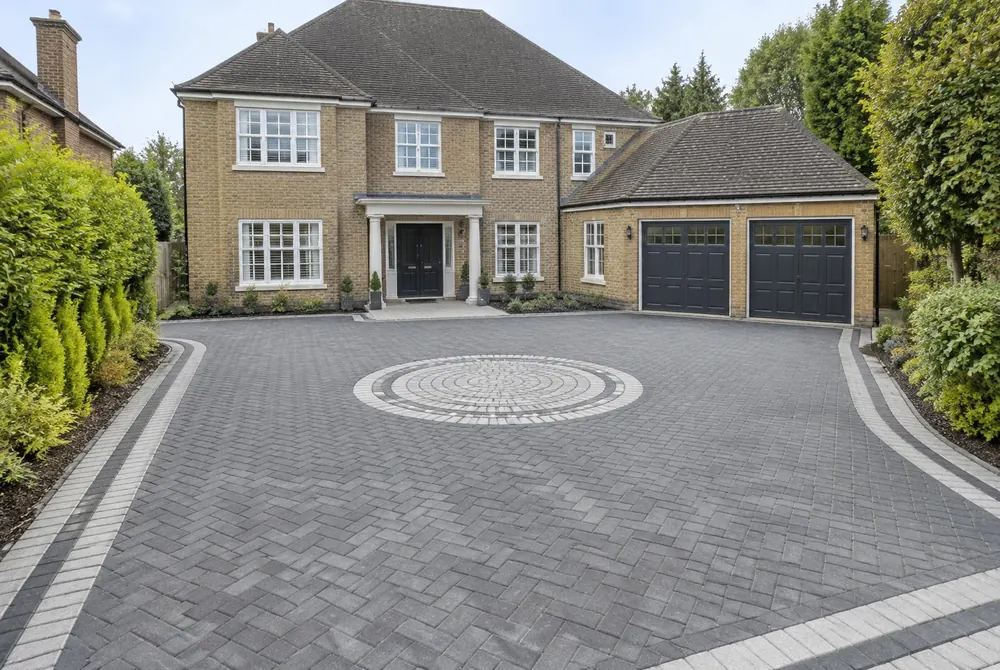
Block paving: around 20 to 30 years
Individual blocks can remain usable even when the laying surface needs attention. This makes the life of the driveway different from the life of each unit: a local area may be lifted and relaid without discarding everything. Widespread settlement, repeated rutting or badly deteriorated blocks make comprehensive renewal more likely than a few chipped corners do.
Permeable block paving: around 20 to 30 years
Permeable blocks have a similar potential structural life to conventional paving, but water entry also matters. Their joints and underlying construction must keep performing together. A driveway can remain level yet lose useful infiltration as sediment accumulates. That calls for investigation and suitable cleaning, not an assumption that the paving units themselves have expired.
Imprinted concrete: around 20 to 30 years
An imprinted concrete slab may remain serviceable after its colour and protective finish have weathered. Fine, stable cracks are a different concern from displaced sections or extensive breakup. Unlike individual blocks, a continuous slab cannot usually be lifted locally and reused, so repairs may remain visible even where they restore practical use.
What makes a driveway wear out early?
Premature failure usually has a cause beyond age. Before paying for another surface, establish whether the original driveway was built for its ground conditions and present use. Otherwise the same pattern can reappear through the replacement.
Movement beneath the finish
Inadequately prepared support, poorly reinstated trenches and moving ground can create hollows or cracks in any finish. On clay soils, seasonal moisture changes may contribute to movement, although not every crack is caused by clay. Several materials failing along the same line can point towards a shared underlying cause. Our driveway sub-base depth guide explains the construction considerations without relying on surface thickness alone.
Loading and water that the driveway cannot handle
A driveway intended for cars may deteriorate faster under regular heavy vans, delivery vehicles or concentrated loads from skips. Repeated tight steering while stationary can also stress the surface. Water trapped in vulnerable layers, combined with freezing conditions or lost support, can accelerate damage. Track where deterioration appears: wheel paths, turning points and persistently wet corners provide useful clues.
Maintenance that protects useful life
Maintenance should preserve the material's function, not simply make it look freshly installed. Start with the original installer or manufacturer's care instructions where available. Aggressive cleaning or an incompatible coating can create a new defect while disguising the old one.
Keep joints, pores and outlets working
Sweep away leaves and soil before they become an established layer. Remove weeds appropriately rather than repeatedly washing out the joints around them. Conventional block paving may need its jointing sand replenished after suitable cleaning; permeable paving needs the correct specified jointing aggregate instead. Do not substitute ordinary sand in a permeable system.
Keep accessible drainage channels clear of debris. If water starts lingering where it previously disappeared, note whether the change followed muddy building work, leaf fall or nearby landscaping. For the wider principles, see driveway drainage and SuDS. Cleaning the surface cannot cure every below-ground drainage fault.
Treat finishes according to their material
Use resin-compatible cleaning products and avoid concentrating a pressure washer on one spot. Imprinted concrete may need compatible resealing as its protective finish wears, but the timing depends on exposure, traffic and the product used. Sealing over contamination or trapped moisture can leave an unattractive result. Neither a new sealer nor a thorough wash restores missing structural support.
Signs that repair could be enough
Repair is most credible when the fault is limited, its cause can be corrected and the surrounding driveway is stable. There is no universal damaged-area percentage that makes replacement compulsory. Consider the likely durability of the repair, the visibility of a patch and whether similar defects are developing elsewhere.
Local damage with a clear boundary
A few damaged blocks, a small settled patch over an old trench or isolated joint loss may be repairable without renewing the whole driveway. Matching new units to weathered paving can be difficult, so retaining sound original blocks has practical value. A repair should address the reason for settlement rather than simply raising the visible surface.
Cosmetic wear without continuing movement
Fading, staining and a weathered concrete sealer can look dramatic without making the driveway unusable. Small resin repairs and concrete crack treatments need material-specific assessment and may show afterwards. Compare photographs taken from the same position over time. A stable mark is a different proposition from a crack that widens or develops a step between its sides.
When replacement becomes the stronger option
Replacement deserves consideration when failures are widespread, keep returning or affect safe use. Extensive wheel-track depressions, moving slab sections, broad resin breakdown or numerous unstable blocks suggest more than superficial ageing. Repeated local interventions can become poor value if each addresses a symptom of the same failing construction.
Separate surface renewal from full reconstruction
Not every replacement needs every layer removed. Equally, putting a new finish over an unsuitable base can waste otherwise serviceable material. The decision depends on the existing layer condition, levels, drainage and compatibility with the proposed surface. An attractive top layer is not evidence that the concealed construction can be reused.
Make the decision using condition, not birthdays
Gather the approximate installation date, any construction records and a short history of repairs. Mark recurring puddles and photograph deterioration after rain as well as in dry weather. Ask which existing layers remain serviceable and what evidence supports that judgement. Compare options over their likely remaining useful life, including maintenance and disruption, rather than choosing solely by the lowest initial outlay.
When to call a professional
Arrange an assessment when defects are spreading, creating trip hazards or returning after previous work. Breaking Ground Ltd undertakes driveway projects within about 30 miles of Colchester across Essex and south Suffolk, but does not offer small repairs. For substantial renewal, a site visit informs a written, itemised quote based on the driveway's condition.
- Cracks are widening or opposite sides are becoming uneven.
- Several areas sink again after being brought back to level.
- Resin is breaking apart across broad areas rather than one isolated spot.
- Standing water or loose paving now interferes with normal access.
Need it sorted? Book Discuss driveway renewal
Services this relates to
Want the figure for your own property? Call 07770 880587 or email enquiries@breakinggroundltd.co.uk and we will arrange a site visit.