
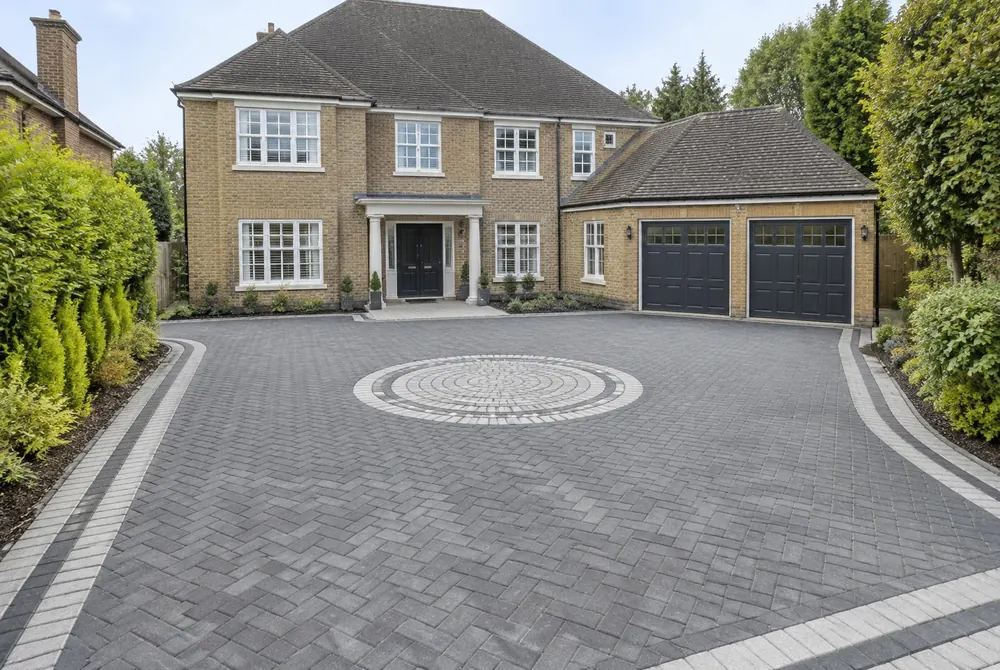
A sub-base for a driveway is a specified, compacted aggregate layer that spreads loads onto the prepared ground. Its thickness and grading follow ground strength, traffic and drainage. Hardcore is a broad description; it does not establish MOT Type 1 compliance or suitability for a permeable system.
At a glance
- Ask for compacted construction, not only delivered aggregate quantity.
- Choose grading to match conventional or permeable design.
- Inspect the formation before concealing unsuitable ground.
The finished driveway is only the top layer of a construction that transfers wheel loads into the ground. When shallow or poorly compacted material moves, blocks rut, resin cracks and channels settle. A thicker decorative surface cannot correct an inadequate foundation.
There is no statutory depth that suits every driveway. Cars, delivery vehicles, subgrade strength, drainage and the chosen finish all influence the build-up. A specification should follow excavation and inspection, not a number copied from another property.
A quotation should therefore describe the intended excavation, formation treatment, aggregate type, compacted thickness and surface system. Compare those elements rather than assuming every proposal headed sub-base offers the same construction.
Start with the formation
The formation is the exposed ground after topsoil, old surfacing and unsuitable material are removed. It is checked for soft spots, made ground and water. A firm sandy formation behaves differently from wet clay, and local weak areas must be dealt with before aggregate is spread.
Excavation also has to create enough room for the sub-base, laying course and surface while preserving thresholds and designed falls. Digging to one depth from the existing surface can repeat its drainage defects.
Type 1 MOT and alternatives
Type 1 is a well-graded crushed aggregate commonly used beneath conventional residential paving. Its particle range allows it to compact into a dense, stable layer. The supplied material should be compliant and free from soil or plaster contamination.
A permeable driveway needs a different open-graded aggregate system. Dense Type 1 does not provide the void space required for storage and infiltration, so calling a resin surface permeable while placing it over a sealed base misses the purpose.
Depth follows loading and ground
A driveway serving cars on competent formation may need a shallower design than a turning area regularly carrying large vans, removals vehicles or construction deliveries. Heavier and channelled loading increases the demand on both aggregate and subgrade.
Published details and manufacturer guidance give typical starting points, but final thickness follows the actual site and system. Where the formation is weak, simply adding stone may not be the best answer; stabilisation, separation or engineered improvement can be more reliable.
Geotextiles and separation
A suitable geotextile can separate aggregate from soft or fine subsoil, reducing contamination and loss of stone into the formation. It is not a magic reinforcement sheet, and the selected grade and overlap should suit the design.
Permeable systems may also use membranes or geotextiles at defined layers to control migration while allowing water movement. The whole build-up should follow one system rather than combining incompatible details.
Compaction in layers
Aggregate is placed and compacted in manageable layers. A deep loose tip cannot be consolidated effectively from the top, leaving movement below an apparently hard crust. Layer thickness and plant passes follow the material and equipment.
Edges, service trenches and drainage channels receive particular attention because access for compaction is restricted. Levels are checked after compaction so the laying course does not become an improvised levelling layer.
Why shallow bases fail
Common warning signs are wheel-track settlement, spreading edges, loose channel drains and repeated depressions over service trenches. Water then collects in the low points and accelerates movement.
A proper rebuild removes the cause, establishes a suitable formation, reconstructs the base and resets drainage. Overlaying the affected area or adding more sand can hide the shape briefly without restoring load capacity.
Hardcore versus MOT Type 1
Hardcore can describe broken stone, brick or concrete intended as fill. Its contents and grading are not established by the word alone. MOT Type 1 refers to aggregate with a specified grading, including fines, selected for a compacted sub-base. Recycled material may be suitable when it meets the required specification; mixed demolition rubble should not be assumed equivalent.
For a genuinely permeable system, the designed drainage layer normally uses open-graded material rather than substituting Type 1. Follow the complete system detail. Our driveways service and drainage guide show how these decisions connect; ask about your ground conditions before choosing a build-up.
Ordering sub-base: turn a material name into a specification
Ask the quotation to identify the required aggregate and the finished build-up. A general description of hardcore cannot establish grading, cleanliness or suitability. Recycled aggregate may be considered where it meets the required specification, but a pile of broken site material is not proven suitable by its appearance.
Keep conventional load-bearing construction and permeable storage requirements distinct. The specified aggregate needs to perform its assigned role within the whole system. Changing the stone because another material is available can alter water movement and compaction, so substitutions should be agreed rather than hidden under the selected finish.
Record the formation and compacted levels
The critical support starts below the aggregate. Soft patches, old trenches and unsuitable fill need an agreed response before construction proceeds. Ask who confirms acceptance and how necessary changes are recorded, particularly where an older driveway conceals previous work.
Read the driveway quotation overview with driveways to compare complete proposals. Send your frontage details if a substantial rebuild is planned. A clear scope identifies inspection and compaction stages so the finishing contractor is not asked to make good an unexplained base supplied by someone else.
Services this relates to
Want the figure for your own property? Call 07770 880587 or email enquiries@breakinggroundltd.co.uk and we will arrange a site visit.