
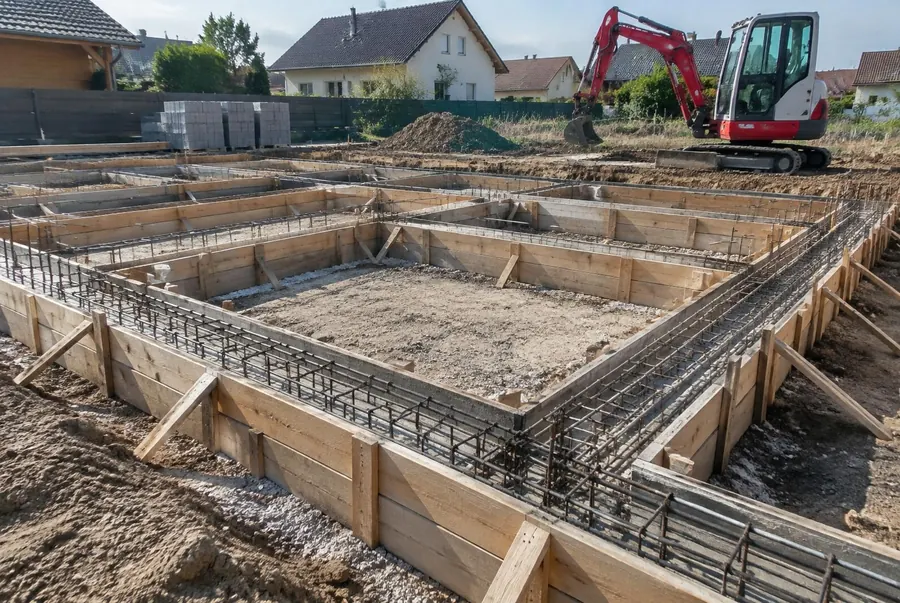
The Party Wall etc. Act 1996 can apply even when all work is on your own land. Section 6 deals with certain excavations near a neighbouring building or structure because digging deeper nearby can affect its support.
Planning permission and building regulations do not replace the Act. Equally, being close to a boundary does not automatically mean section 6 applies. Distance, proposed depth and the neighbour's foundation level must be considered using the statutory tests.
The building owner should allow time for this process in the programme and should not treat surveyor involvement as an optional construction cost that can be resolved after excavation starts.
Allow enough time for notices and any award when setting the build programme. A contractor cannot cure a missing statutory process by using a cautious excavator, and neighbour agreement made informally may not provide the clarity the Act requires. Keep copies of notices, responses, drawings and awards with the construction records. Confirm any access rights separately, because the Act does not turn every preferred access arrangement into an automatic entitlement.
The 3 metre test
Notice is required where proposed excavation is within 3 metres of part of a neighbouring building or structure and will go deeper than the bottom of its foundations. Both distance and depth conditions matter.
The measurement is to the neighbouring building or structure, not simply to the legal boundary. Existing foundation depth may need investigation rather than assumption, particularly with older or altered properties.
The 6 metre and 45 degree test
A separate test reaches up to 6 metres. It applies where the proposed excavation would cut a plane drawn downward at 45 degrees from the bottom of the neighbour's foundations towards the excavation.
This commonly becomes relevant with deeper foundations, piled works or level changes. A plan and section prepared from reliable information make the assessment clearer than a verbal distance estimate.
One month's notice
A section 6 excavation notice is served at least one month before the intended work. This is distinct from the two-month period associated with some party-structure work under section 3.
Starting early because planning permission has been granted can breach the Act. The notice should include the required plans and sections, and service should be documented.
Consent and dissent
An adjoining owner may consent in writing. If they dissent or do not respond within the statutory process, surveyors can be appointed and an award made that sets how the work proceeds.
The surveyors act under the Act rather than as advocates for construction shortcuts. A schedule of condition is commonly prepared so the pre-work state is recorded.
What the contractor needs
Before excavation, the contractor should have the structural detail, relevant award and method requirements, access arrangements and agreed working hours. Temporary support, sequence and inspection points need to match the engineer's design.
Unexpected shallow neighbouring foundations or different ground are referred immediately. The existence of an award does not justify continuing with conditions outside the design.
Other party wall situations
Work to a shared wall, building on the line of junction and some boundary structures fall under other sections with different procedures. Retaining walls can be relevant where they are party structures or where their excavation triggers section 6.
A party wall surveyor or suitably experienced professional should advise on a particular proposal. This guide explains the construction context but is not a notice or legal opinion.
What people mean by a party wall agreement
A party wall agreement is not a single document the law calls by that name. People usually mean either the neighbour's written consent to the notice, or a party wall award drawn up by surveyors when the neighbour does not consent. Either way, it records that the statutory process has been followed and, in the case of an award, how and when the work may be carried out.
An award typically sets out the work allowed, working hours, access, protection for the neighbouring property and a record of its condition beforehand. It is binding on both owners.
Timescales in general terms
After an excavation notice is served, the adjoining owner has 14 days to respond. If they do not reply, a dispute is treated as having arisen and surveyors are appointed. Producing an award then takes time to arrange inspections and agree the details, so the overall process often runs well beyond the one-month notice period. Build that into the programme rather than booking excavation for the day after planning is granted.
This is general information, not legal advice. A party wall surveyor should advise on your particular proposal.
Where the contractor fits in
We do not serve notices or act as surveyors, but we plan the excavation around what the award says. The engineer's design and the award together set the trench sequence, any temporary support and the inspection points. Our extension foundations service explains how the foundation stage runs once the paperwork is in place.
Need it sorted? Book extension foundations
Services this relates to
Want the figure for your own property? Call 07770 880587 or email enquiries@breakinggroundltd.co.uk and we will arrange a site visit.