
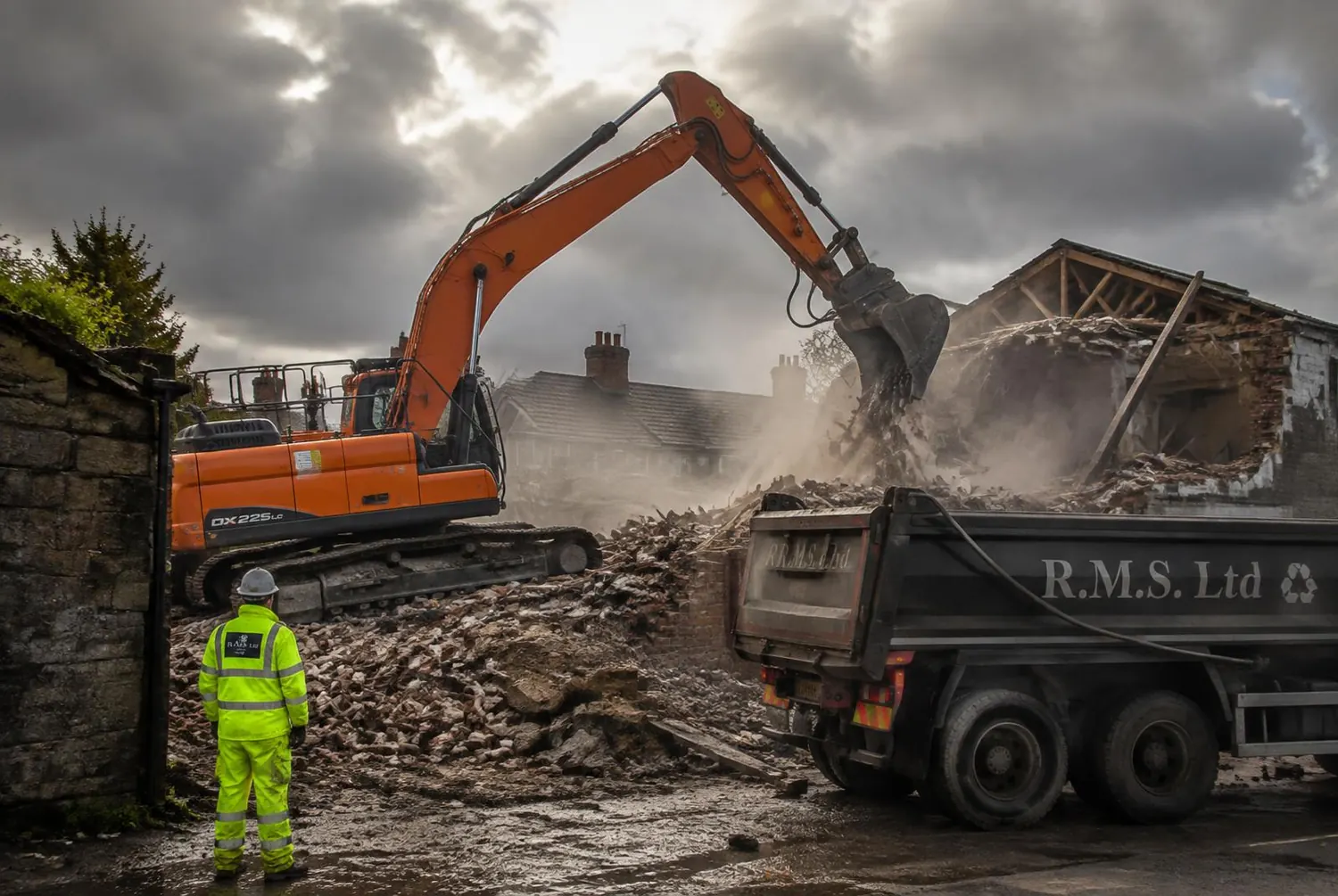
Muck away and grab hire cost follows material type, quantity, weight, loading access, haulage and disposal. Compare quotes using the same units and waste description. Grab arrangements are assessed and confirmed for the project; no fleet, vehicle capacity or fixed hire price is claimed here.
At a glance
- State whether the allowance is by load, tonne or volume.
- Keep different waste types identified.
- Confirm access and extra-load arrangements before collection.
Removing spoil is one of the least glamorous parts of a project, yet it can be a significant share of the groundworks budget. A reduced level dig, a new driveway or a set of foundations can produce far more soil than people expect, because loose soil takes up more room than it did in the ground.
This guide explains what drives grab hire cost and muck away cost. It does not give figures, because the price depends on your material, your access and current disposal charges. We price every job from a site visit with a fixed, itemised quote.
Muck away and grab hire cost factors
| Cost factor | What changes | Why it matters |
|---|---|---|
| Volume and tonnage | How much material leaves site | Soil bulks up once dug, and heavy wet clay can mean a lorry is full by weight before it is full by volume. |
| Material type | Clean soil, hardcore, mixed or contaminated | Disposal charges differ by waste type, and mixed loads cost more to process. |
| Access | Where the lorry can stand and reach | Restricted access may mean smaller loads, more trips or a different method. |
| Distance | How far to a suitable tip or recycler | Longer round trips reduce the number of loads a lorry can complete in a day. |
| Loading method | Grab arm, excavator or hand loading | Loading time and labour vary with the method and how the heap is placed. |
Factors only. We price every job from a site visit with a fixed, itemised quote.
Volume, bulking and tonnage
Soil expands when it is dug. Measured in the ground it may look modest; heaped on a drive it can be noticeably larger. Quotes may be based on loads, on tonnes or on an estimated volume, so check which unit each contractor is using before comparing.
Clay holds water and is heavy, so a load of wet clay can reach the lorry's weight limit with space to spare. Light topsoil behaves differently. Either way, the number of loads is what the bill is built on.
What the material is
Clean natural soil and inert hardcore are the simplest to dispose of and may be recycled. Topsoil can sometimes be reused on site in landscaping. Mixed loads, with timber, plastic or plasterboard in them, cost more because they must be sorted. Anything suspected of contamination, including asbestos, needs testing and specialist handling and should never be hidden in a general load.
Separating material as the job goes on, rather than at the end, usually keeps costs down.
Access and loading
A tipper loaded by an excavator on a wide drive is the most efficient way to move a large volume. Where the heap sits behind a wall or in a front garden, a grab lorry can reach over without anyone barrowing. Narrow lanes, low cables, weak paving and steep drives can rule out bigger vehicles and increase the number of trips. See our grab hire page for what a grab needs on site.
Distance and disposal
Every load travels to a licensed site and pays a charge there. The further the site, the fewer loads per day. Disposal charges are set by the receiving site and vary by material, which is why an honest quote explains how waste types are priced rather than giving one rate for everything.
Paperwork is part of the price
Under the duty of care, the person producing the waste must make sure it goes to a properly authorised place. Every load should leave with a waste transfer note. A suspiciously low price can be a sign that waste is going somewhere it should not, and the property owner can be held responsible.
Comparing quotes fairly
Ask each contractor how they measured the volume, what material types they have allowed for, whether reuse on site has been considered, and how extra loads are charged if the ground produces more than expected. When spoil removal is part of a wider excavation and muck away package, check it is itemised rather than buried in a single figure.
- Unit used: loads, tonnes or volume
- Material types allowed for
- Access and loading method assumed
- How extra loads are priced
- Waste transfer notes provided
Keep the waste allowance measurable
Photographs and approximate dimensions help an initial assessment, but the material and loading location still need checking. Use excavation and muck away for the wider scope, and grab hire for access considerations. Send the removal details and ask how additional quantities would be agreed.
Need it sorted? Book muck away
Services this relates to
Want the figure for your own property? Call 07770 880587 or email enquiries@breakinggroundltd.co.uk and we will arrange a site visit.