
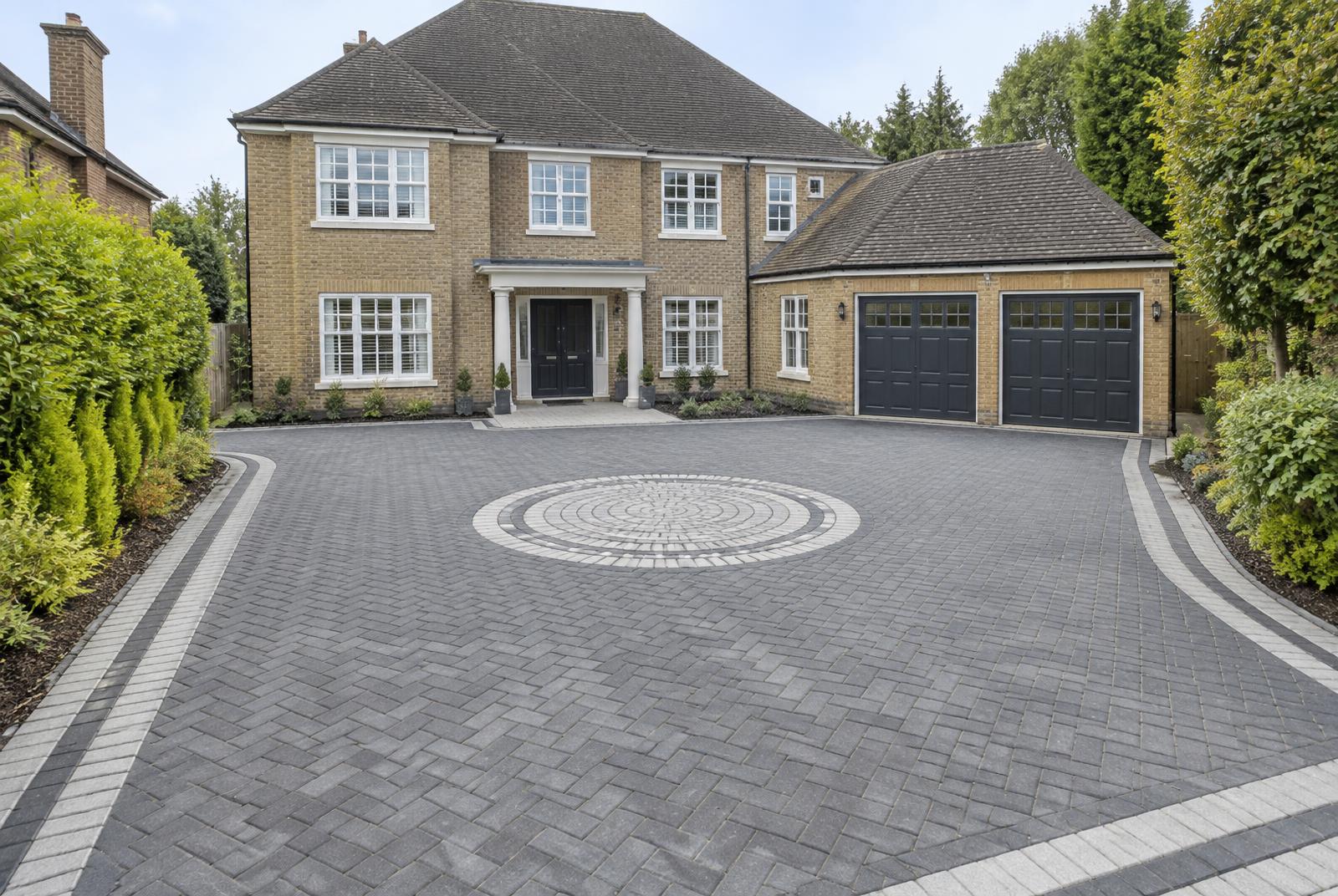
For most homeowners the answer is no, provided the surface deals with its own water. The rule is simpler than it is usually made to sound, and it has been in place since 2008.
Where it goes wrong is the detail: a sealed surface draining to the road, a dropped kerb assumed to be included, or a flat with no permitted development rights at all. This guide sets out where you stand before you commit to a design.
The rule in plain terms
You can lay any amount of hard surface in a front garden without planning permission if it is made of permeable material, or if surface water from it drains to a border, lawn or soakaway within your own boundary.
Planning permission is needed only where more than five square metres of new impermeable surfacing drains onto a road or pavement. That is the whole test for the surfacing itself.
Ways to comply without an application
- Permeable block paving with grit filled joints and an open graded base
- Resin bound gravel over a permeable sub base
- Gravel, which is inherently permeable
- A sealed surface falling to a channel drain and a correctly sized soakaway
- A sealed surface falling to a planted border wide enough to take it
When you do need permission
- Flats and maisonettes, which have no permitted development rights
- Listed buildings, where listed building consent may also apply
- Some conservation areas and properties under an Article 4 direction
- New build homes where a planning condition restricts frontage changes
- Any work that removes a wall or hedge subject to a condition or order
The dropped kerb is separate
Planning rules cover the surface. Crossing the pavement is a highways matter and needs a vehicle crossing application to Essex County Council or Suffolk County Council, with its own criteria on visibility, footway construction and depth of hardstanding behind the kerb. Approval of one does not imply the other.
How we handle it
We design frontages to comply as a matter of course, because a compliant drive is also a drive that keeps water away from your house. Where an application or a crossing licence is needed, we set out exactly what is required and work to the approved detail.
Services this relates to
Want the figure for your own property? Call 07770 880587 or email enquiries@breakinggroundltd.com and we will arrange a site visit.